
Post-Construction Cleaning in New Jersey: A Complete Guide
Renovation dust travels everywhere. Learn how professional cleanup moves a project from substantial completion to ready-to-use.
Seasonal savings, spotless spaces.
Get occasional cleaning tips and members-only promotions.
Why construction dust is different
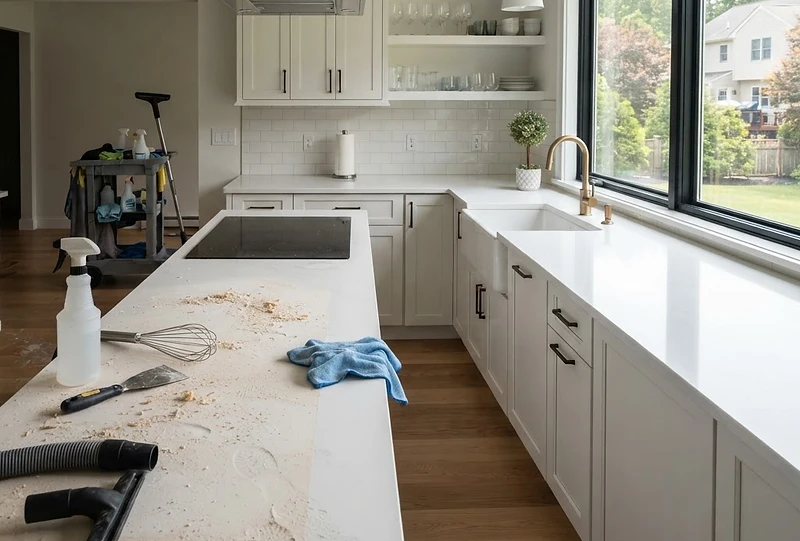
Fine drywall, wood, and masonry particles migrate through door gaps, settle inside cabinets, and recirculate from ledges. Ordinary household dusting often redistributes them, so cleanup requires controlled removal with appropriate filtration and repeated passes.
The three cleaning phases
Rough cleaning removes debris after trades finish. Detail cleaning addresses surfaces, fixtures, glass, cabinetry, edges, and floors. A final touch-up catches dust that resettles before occupancy, photography, inspection, or handover.
Protect new finishes
Every new material has limits. Freshly finished wood, natural stone, specialty glass, stainless steel, and painted millwork require compatible products and non-abrasive tools. Product labels and contractor care instructions should guide the cleaning method.
Plan before the final deadline
Schedule cleaning only after dusty work and punch-list repairs are substantially complete. Confirm utilities, water, elevator access, waste removal, parking, and security so the crew can focus on turning over the space efficiently.
Frequently asked questions
Can regular cleaners remove construction dust?
Post-construction work typically requires specialized sequencing, filtration, tools, and extra detail passes.
When should final cleaning be scheduled?
After major trades and dusty repairs finish, with enough time for a final touch-up before occupancy.