
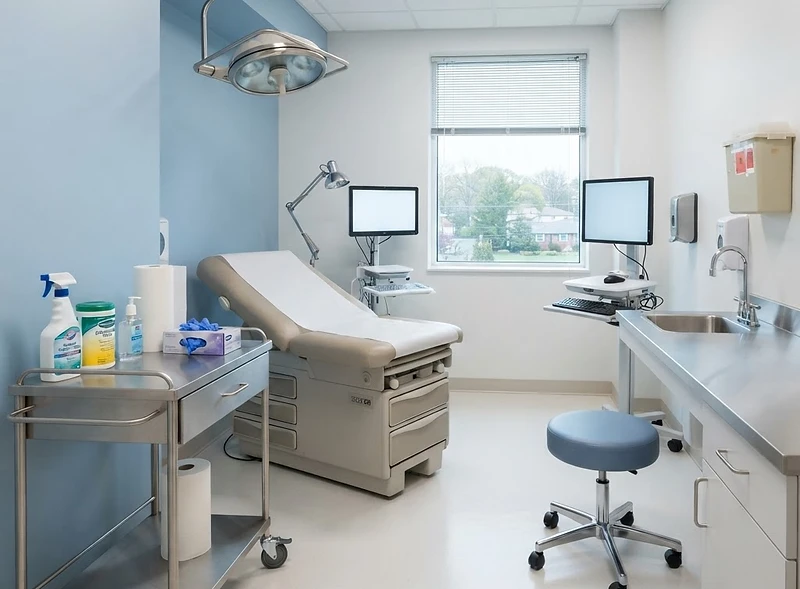
Medical Office Cleaning Protocols: What NJ Practices Should Expect
Clinical offices need clear scopes, trained teams, compatible disinfectants, and accountability beyond ordinary office cleaning.
Seasonal savings, spotless spaces.
Get occasional cleaning tips and members-only promotions.
Separate clinical and public zones
Waiting rooms, administrative offices, exam rooms, staff spaces, and restrooms have different touchpoints and risk profiles. A site-specific scope should define tasks and frequencies for each area rather than applying one generic checklist.
Use products correctly
Cleaning removes soil; disinfection follows label directions for approved surfaces and required contact time. Teams need access to product safety information and must avoid shortcuts such as wiping a disinfectant dry before its labeled dwell time.
Prevent cross-contamination
Color-coded cloths, clean-to-dirty sequencing, dedicated restroom tools, glove changes, and controlled waste handling help reduce transfer between areas. Reusable tools should be laundered and stored according to a documented process.
Define boundaries and reporting
Routine environmental cleaning is not regulated biohazard remediation or clinical waste treatment. The service agreement should document exclusions, incident escalation, quality inspections, security, and who approves scope changes.
Frequently asked questions
Is medical office cleaning the same as regular office cleaning?
No. Clinical spaces typically require site-specific protocols, product controls, training, and documentation.
Does routine cleaning include biohazard remediation?
Usually not. Regulated or hazardous cleanup requires properly qualified specialists and a separate scope.